

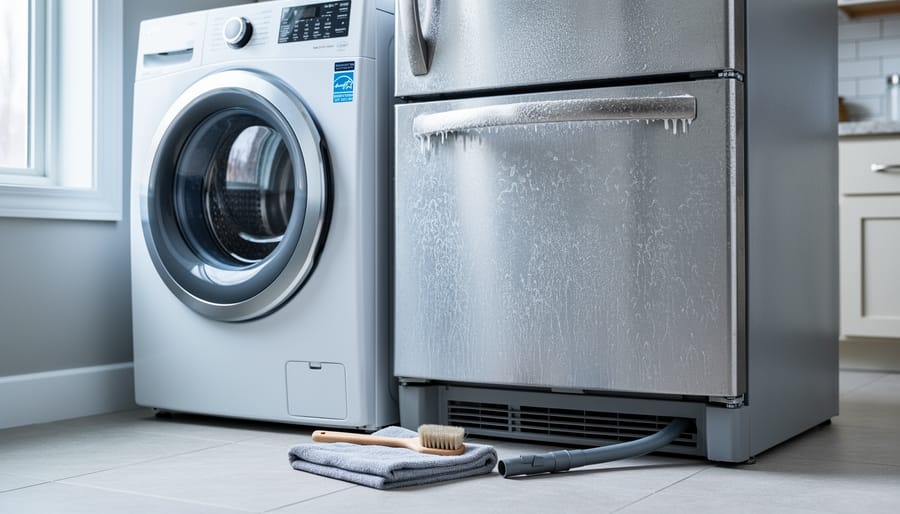

Regular maintenance of your energy-efficient appliances can slash your utility bills by 5 to 15 percent and add years to their lifespan, often requiring nothing more than 15 minutes of attention each month. Canadian homeowners are increasingly investing in ENERGY STAR-rated fridges, front-load washers, and high-efficiency heat pumps, but these smart purchases lose their edge when dust clogs the coils, mineral deposits choke the spray arms, or lint restricts airflow. The good news? Most maintenance tasks demand only basic tools and a bit of elbow grease, not a technician’s hourly rate.
Canadians face unique challenges that accelerate wear and tear. Hard water in cities like Calgary and Regina leaves stubborn scale buildup. Long heating seasons in Winnipeg and Edmonton push furnaces and dryers harder than their southern counterparts. Even coastal humidity in Vancouver and Halifax affects how appliances perform. Tailoring your maintenance routine to these conditions means your fridge won’t overwork in -30°C winters, your dishwasher won’t clog with mineral deposits, and your dryer won’t become a fire hazard.
Below, you’ll find ten practical maintenance tips designed specifically for Canadian households. Each one targets common problems, uses products readily available at Canadian Tire or Home Hardware, and fits into a busy schedule. Whether you’re a first-time homeowner in Toronto or a cottage owner in Muskoka, these steps will keep your appliances running efficiently year-round.
Table of Contents
How We Selected These Maintenance Tips
We chose these maintenance tips by talking with Canadian appliance technicians who service equipment in extreme cold and humidity conditions that push appliances harder than in milder climates. We reviewed Energy Star Canada recommendations specific to our climate zones and energy rates, ensuring every tip delivers measurable savings on your utility bills.
Real feedback from Canadian homeowners shaped our list, we focused on tasks you can actually do yourself without special tools or training. Each tip addresses problems common in Canadian homes, from hard water buildup in the Prairies to dust circulation from forced-air heating systems. We prioritized maintenance that works with products available at local retailers like Home Hardware and Canadian Tire, so you’re not hunting for specialty items.
For tasks that need professional expertise, like dryer vent cleaning, we recommend connecting with trusted local services such as dryerventcleanexperts.com who understand Canadian building codes and climate challenges. Our goal: practical, proven tips that fit Canadian life and keep your energy-efficient appliances running efficiently year-round.
1. Clean Your Refrigerator Coils Every Six Months
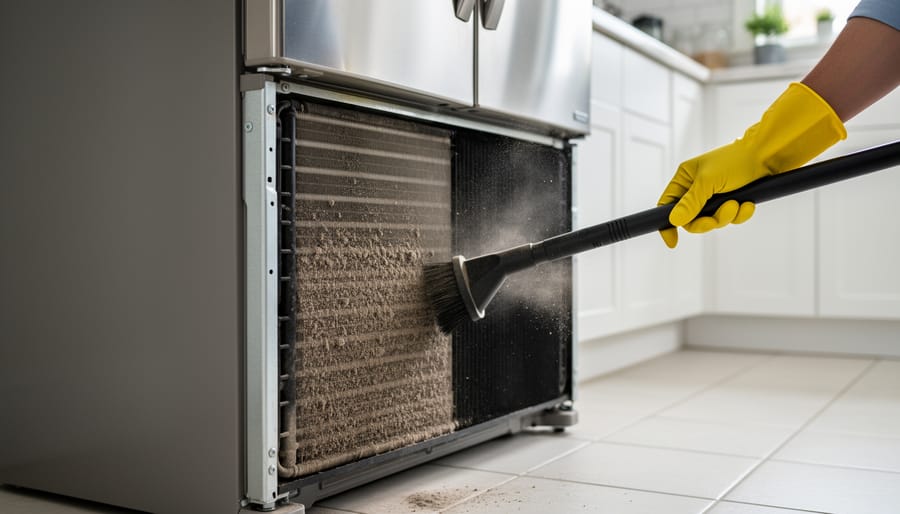
Your refrigerator’s condenser coils work continuously to remove heat, but when dust and pet hair accumulate on them, the unit has to run longer and harder to maintain the same temperature. This buildup can increase your fridge’s energy consumption by up to 25%, turning one of your home’s biggest energy users into an even bigger drain on your electricity bill.
In Canadian homes with forced-air heating systems, dust circulates more readily during our long heating season, making coil maintenance especially critical. Brands like Danby, which are popular in Canadian households, typically locate their coils either on the back panel or beneath the unit behind a front grille.
Cleaning your coils is straightforward and takes about 15 minutes. First, unplug your fridge or turn off the circuit breaker for safety. If the coils are on the back, pull the fridge away from the wall. For bottom-mounted coils, remove the front grille by gently prying or unscrewing it. Use a coil brush (available at Canadian Tire or Home Hardware) or a vacuum with a brush attachment to gently remove dust and debris. Work carefully to avoid bending the delicate fins.
Once you’ve cleaned both sides of the coils thoroughly, replace any grilles and restore power. This simple twice-yearly task helps your fridge run efficiently year-round, which is particularly valuable when you consider that Canadian households keep their refrigerators running 24/7 through temperature extremes that can range from minus 30 to plus 30 degrees Celsius.
2. Replace or Clean Your HVAC Filters Monthly
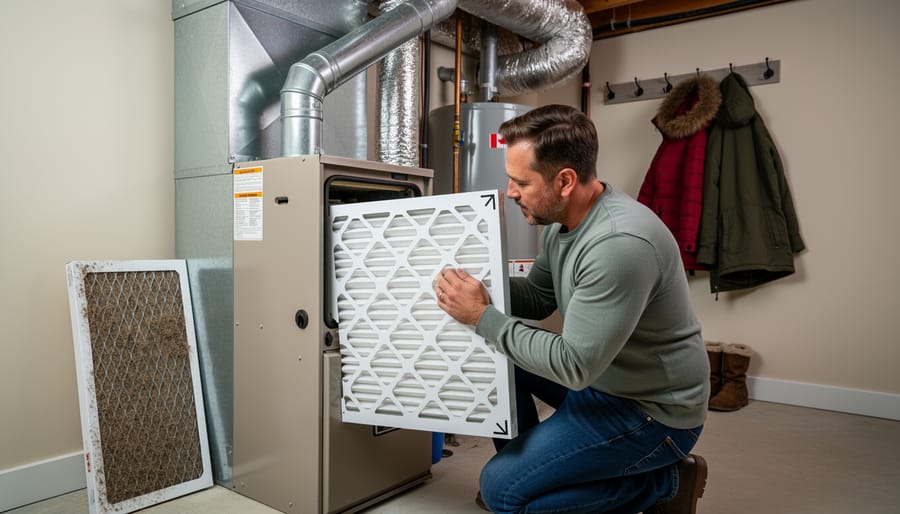
Your HVAC system battles some of the harshest temperature swings on the planet, from humid 30°C summers to brutal -35°C prairie winters. When your furnace or air conditioner filter gets clogged with dust, pet hair, and airborne particles, your system has to strain significantly harder to push air through your home. This can increase your energy consumption by 5 to 15 percent and shorten the lifespan of expensive components.
Canada has two main filter types. Disposable pleated filters (typically $15 to $30 at Canadian Tire, Home Hardware, or Rona) should be replaced monthly during high-use seasons and every three months during milder weather. Washable filters, common in brands like Carrier and Lennox systems, can be rinsed with water, dried completely, and reinstalled. These cost more upfront ($40 to $80) but last several years with proper care.
Set a calendar reminder on your phone for the first day of each month. Turn off your system, locate the filter slot (usually near the return air duct or furnace), slide out the old filter, and note the arrow indicating airflow direction before installing the new one. During spring pollen season and winter when your furnace runs constantly, you might need to check filters every two weeks. Homes with pets or renovation dust should inspect even more frequently.
This five-minute task delivers immediate results: better airflow, lower utility bills, and a system that heats and cools efficiently when you need it most.
3. Descale Your Dishwasher and Washing Machine Regularly
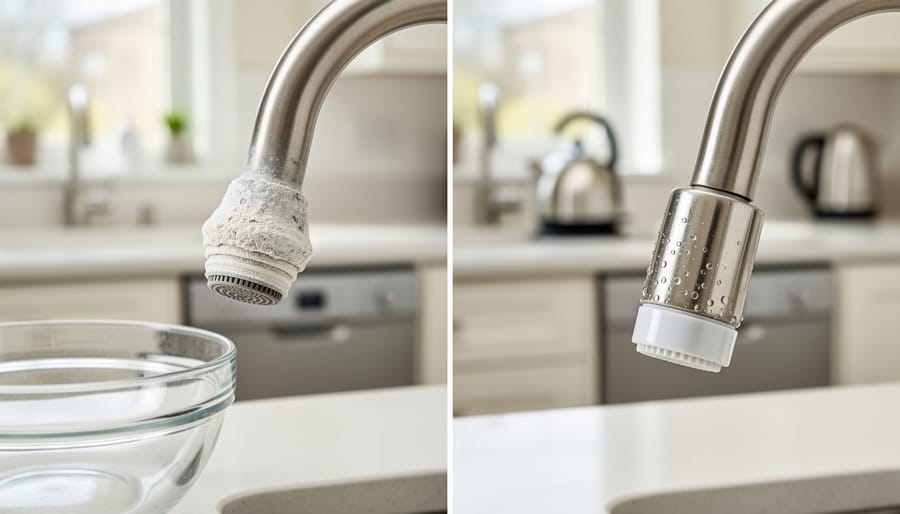
Hard water is a reality for many Canadians, particularly in Ontario, Alberta, Saskatchewan, and Manitoba. When your dishwasher and washing machine heat water loaded with calcium and magnesium, those minerals crystallize and coat internal components, heating elements, spray arms, hoses, and drum surfaces. This crusty buildup forces your appliances to work harder and longer to achieve the same results, increasing energy consumption by 20-30% and shortening their lifespan.
Watch for these telltale signs your appliances need descaling:
- Cycles taking noticeably longer than usual
- White, chalky residue on dishes or inside the washer drum
- Dishes or clothes coming out less clean despite using the same detergent
- Grinding or unusual noises during operation
Descaling is straightforward and inexpensive. For dishwashers, remove all dishes and run an empty cycle on the hottest setting with two cups of white vinegar placed in a bowl on the top rack. For washing machines, run an empty hot cycle with four cups of vinegar or a commercial descaler like CLR or Affresh (both widely available at Canadian Tire, Home Hardware, and Walmart). Top-loading machines benefit from pausing mid-cycle to let the solution soak for an hour.
How often you descale depends on your water hardness. If you have very hard water (common in Calgary, Regina, or rural Ontario), descale monthly. Moderate hardness calls for quarterly descaling, while softer water regions can stretch to twice yearly. You can test your water hardness with kits from most Canadian hardware stores or check your municipal water report online. This simple routine protects your investment and keeps energy bills in check.
4. Check and Clean Your Dryer Vent System
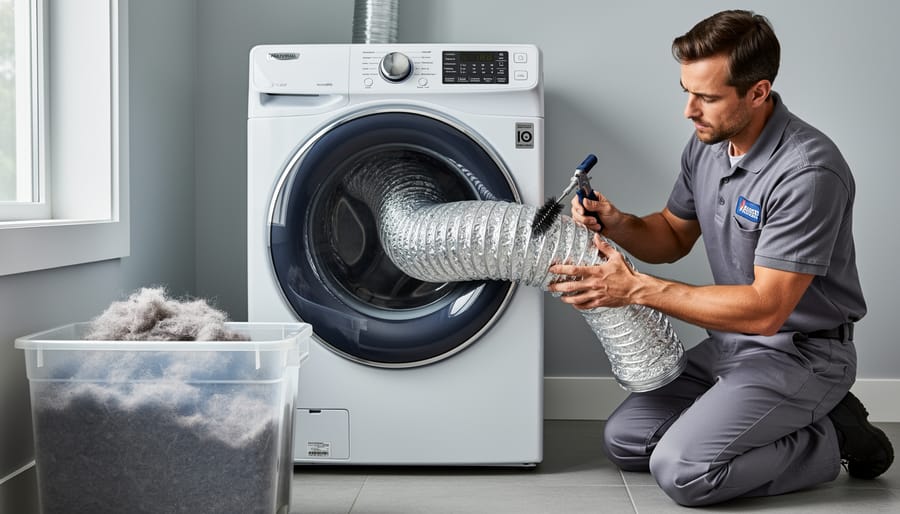
A clogged dryer vent is one of the most dangerous, and costly, maintenance issues in Canadian homes. When lint and debris accumulate in your vent system, your dryer works harder and longer to dry each load, which can spike energy consumption by up to 30%. Worse, the buildup creates a serious fire hazard. The Canadian Home Builders’ Association estimates thousands of dryer fires occur annually, many preventable through simple cleaning.
Start by cleaning the lint trap after every single load, this takes five seconds and dramatically improves airflow. But that’s just the beginning. Every three to six months (more often if you do multiple loads weekly), disconnect your dryer and vacuum out the vent opening where the hose attaches. Then check the external vent hood outside your home. If you see lint buildup, it’s time for a deep clean.
For the ductwork itself, you have two options. Use a dryer vent cleaning kit from Canadian Tire or Home Hardware, these long, flexible brushes attach to your drill and snake through the vent. Or hire a local appliance service tech to do it professionally, which many Canadian homeowners opt for annually.
During our long winters when dryers run constantly, this maintenance becomes even more critical. Many Canadians report cutting drying time nearly in half after a thorough vent cleaning, which means real savings on every load.
5. Inspect and Replace Weather Stripping on Appliances

Worn or damaged weather stripping around appliance doors quietly drains energy without most homeowners noticing. When the rubber seals on your refrigerator, freezer, or oven lose their grip, cold or hot air escapes constantly. Your appliance detects the temperature change and runs its compressor or heating element more frequently to compensate, sometimes increasing energy use by 10-15%. Over a Canadian winter, that adds up fast on your hydro bill.
Testing your seals takes about 30 seconds. Grab a dollar bill and close it in the appliance door. Try pulling it out. If it slides out easily with no resistance, the seal has lost its effectiveness and needs replacing. Check multiple spots around the entire door, since wear often happens unevenly.
Look for visible signs too: cracks, tears, hardened rubber, or sections that no longer sit flush against the door frame. Canadian Tire, Home Hardware, and local appliance parts retailers stock universal and brand-specific replacement seals. Brands like Whirlpool Canada and Frigidaire offer exact-fit replacements through their websites or authorized dealers.
Replacing weather stripping is straightforward. Most seals pull out from a groove and new ones snap or press into place without tools. Tackle this maintenance task once you notice any issues rather than waiting. Fresh seals pay for themselves within months through reduced energy consumption.
6. Keep Your Freezer Well-Stocked (But Not Overpacked)
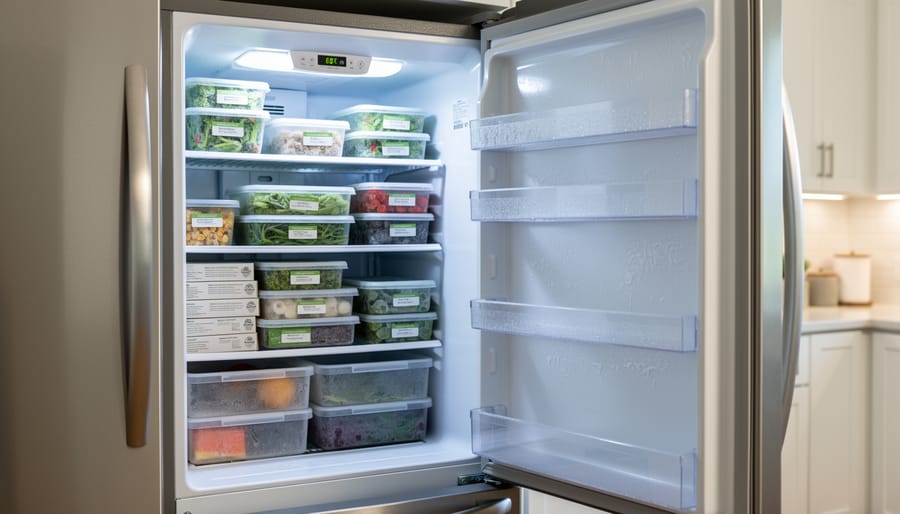
A well-stocked freezer is more energy-efficient than an empty one, and it’s a maintenance tip that actually saves you money while keeping your food fresher. Here’s why: frozen food acts as thermal mass. Once items are frozen, they help maintain the cold temperature inside your freezer, reducing how often the compressor needs to kick in to cool things down. In simple terms, your frozen groceries do some of the work your freezer would otherwise have to do.
The sweet spot is keeping your freezer about 70-80% full. Fill empty spaces with containers of water, ice packs, or frozen bread if you’re running low on food. This is particularly smart in Canadian winters when power outages from ice storms or heavy snowfall can happen. A well-stocked freezer stays cold much longer during an outage, sometimes 24 to 48 hours if you don’t open it.
But don’t overpack. Cramming too much in blocks the air vents and prevents cold air from circulating properly, forcing your freezer to work harder and use more energy. Leave space around vents (check your manual for their location) and organize items so air can flow. Stack neatly, avoid blocking the fan, and keep frequently-used items accessible so you’re not digging around with the door open.
7. Clean Range Hood Filters and Fans

Range hood filters trap grease and airborne particles, but when they clog up, your ventilation system can’t do its job properly. The fan has to work harder to pull air through the blockage, using more energy while doing less to remove cooking heat, steam, and odours. In Canadian homes where we cook indoors all year (no summer grilling breaks in February), this buildup happens faster than you might think.
Most range hoods use either metal mesh filters or charcoal filters. Metal mesh filters are dishwasher-safe, run them through every month if you cook daily, or every two months for lighter use. You can also soak them in hot water with dish soap and baking soda for 15 minutes, then scrub gently with a soft brush. Charcoal filters aren’t washable; replace them every three to six months depending on your cooking frequency. Check your owner’s manual for the exact type.
Don’t forget the fan blades themselves. Wipe them down with a damp cloth and degreaser every few months. Canadian retailers like Canadian Tire and Home Hardware carry replacement filters for most brands, so you can easily keep spares on hand and swap them out before efficiency drops.
8. Test and Calibrate Your Oven Temperature

An oven that runs 25 degrees hotter or cooler than the display shows forces your appliance to work inefficiently, cycling longer to reach the right temperature and wasting energy with every meal you cook. Temperature drift is common in older ovens and can develop gradually even in newer models, meaning you might not notice until your baking results go sideways or your hydro bill creeps up.
Testing your oven takes five minutes and costs about $10 for an oven thermometer from Canadian Tire, Home Hardware, or your local kitchen shop. Preheat your oven to 350°F, place the thermometer on the centre rack, wait 15 minutes, then check the reading. If it’s off by more than 15 degrees, your oven needs recalibration. Many electric ovens have a simple adjustment screw behind the temperature dial or a digital calibration mode in the settings menu (check your manual). Gas ovens often require a technician to adjust the flame or gas valve.
Canadian homeowners report that older electric ranges from brands like Frigidaire and GE commonly drift over time, while convection models with multiple heating elements can have hot spots that skew results. If your oven is off by more than 35 degrees or you can’t locate the calibration controls, call a local appliance technician. Regular testing twice a year keeps your oven efficient and your energy costs predictable, much like how routine checks on systems such as heat pump costs evaluating if are heat pumps worth it or understanding duct cleaning cost help you maintain your home’s overall efficiency.
9. Vacuum Around and Behind Appliances
Dust bunnies lurking behind your refrigerator, washing machine, or water heater aren’t just unsightly, they’re efficiency killers. When dust and pet hair accumulate around appliances, they block ventilation grilles and clog cooling fans, forcing motors to work harder and run hotter. Over time, this extra strain shortens appliance lifespan and drives up energy consumption, sometimes by 10-20%.
Set a quarterly routine to tackle this simple task. Unplug the appliance first (or turn off the breaker for hardwired units), then carefully pull it away from the wall using proper lifting technique or a furniture dolly. Vacuum the floor, baseboards, and back panel using your vacuum’s crevice tool. Pay special attention to coils, vents, and fan openings. While you’re back there, check that airflow around your water heater temperature controls and vents remains clear, this applies whether you have a traditional tank or are considering tankless water heater costs for an upgrade.
Canadians can sync this task with seasonal changes: spring cleaning, pre-winter prep, and mid-summer work perfectly. It takes 15 minutes per appliance and prevents costly repairs down the road.
10. Schedule Annual Professional Inspections for Major Systems
While DIY maintenance handles the basics, some tasks require a professional’s expertise and diagnostic tools. Scheduling annual inspections for your major systems catches problems before they become expensive failures and keeps your energy-efficient appliances performing at their best.
Your HVAC system tops the priority list. Technicians clean internal components, check refrigerant levels, calibrate thermostats, inspect electrical connections, and test airflow, all things you can’t safely or effectively do yourself. They’ll spot worn parts before they fail mid-winter or during a summer heat wave, which is critical in Canada’s extreme temperatures.
Water heaters also deserve professional attention, especially if you have hard water. Technicians flush sediment buildup, check the anode rod (which prevents tank corrosion), test the pressure relief valve, and inspect electrical or gas connections. These checks prevent inefficiency and extend the tank’s life well beyond the typical 8-10 years.
Major kitchen appliances like ovens, ranges, and high-end refrigerators benefit from tune-ups too. Technicians recalibrate temperature sensors, check seals and gaskets you might miss, inspect internal components for wear, and ensure everything runs efficiently.
Time these inspections with Canada’s seasonal transitions. Schedule HVAC servicing in spring before cooling season and fall before heating season. Book water heater checks in autumn, and arrange appliance tune-ups during slower service periods like late winter or early spring when you’ll get better availability and potentially lower rates.
Supporting local Canadian appliance service businesses keeps your money in the community and builds relationships with technicians who understand regional challenges like hard water, extreme cold, and the specific brands popular in your area. Many offer maintenance packages that bundle services at a discount, making annual care more affordable.
Frequently Asked Questions
How much money can regular maintenance actually save on my energy bills?
Consistent maintenance can reduce your energy costs by 10-30% annually, depending on your appliance mix and current condition. For a typical Canadian household spending $2,000-3,000 per year on utilities, that translates to $200-900 in savings, enough to cover the cost of filters, cleaning supplies, and even an annual professional tune-up.
Is paying for professional maintenance worth it if I’m doing DIY tasks?
Yes, for major systems like HVAC and water heaters. Professionals catch issues you can’t easily spot (refrigerant leaks, gas connections, electrical problems) and their tune-ups often pay for themselves through improved efficiency. Many Canadian homeowners combine DIY monthly tasks with annual pro inspections for the best balance of cost and peace of mind.
What if I rent my home, can I still do these maintenance tasks?
Absolutely. Most of these tips are non-invasive tasks that benefit both you and your landlord: cleaning coils, changing filters, and descaling appliances. For anything requiring access to sealed components or professional service, communicate with your landlord, many appreciate proactive tenants who help extend appliance life. Keep receipts if you purchase supplies.
How do I know when an appliance is beyond maintenance and needs replacing?
Watch for these signs: repair costs exceeding 50% of replacement value, frequent breakdowns despite maintenance, age beyond the typical lifespan (10-15 years for most appliances), or a significant spike in energy consumption. Canadian rebate programs often make upgrading to newer Energy Star models more affordable than you’d expect.
Are there maintenance considerations unique to Canada?
Our extreme temperature swings and long winters put extra stress on appliances. Hard water in many regions requires more frequent descaling, forced-air heating circulates more dust to coils and filters, and dryers work overtime during months when line-drying isn’t practical. Seasonal transitions are ideal times to tackle maintenance tasks.
These questions come up repeatedly in Canadian home maintenance forums and appliance service calls. The reality is that maintenance isn’t glamorous, but it’s one of the few home tasks where a small time investment delivers measurable financial returns. Start by tackling whichever issue seems most pressing in your home, maybe your dryer is taking two cycles to finish a load, or your fridge is running constantly. That quick win builds momentum for the rest.
Taking care of your energy-efficient appliances doesn’t require a complete overhaul of your routine. Start with one or two maintenance tasks that feel manageable, cleaning your fridge coils or swapping out an HVAC filter, and build from there. These small actions compound over time, keeping your appliances running efficiently through Canadian winters and summers alike, trimming your utility bills, and helping your investments last years longer.
Canada’s climate demands a lot from our appliances. Extreme cold, humidity swings, and heavy indoor use during long winters mean regular maintenance isn’t optional; it’s essential. The good news? Most of these tasks take minutes and cost almost nothing.
When you do need replacement parts, filters, or professional service, consider supporting local Canadian businesses and technicians who understand our unique climate challenges. They’re your neighbours, and they stock the right products for our conditions.
Your appliances work hard for you. Return the favour with consistent care, and they’ll reward you with lower energy bills and reliable performance for years to come.


